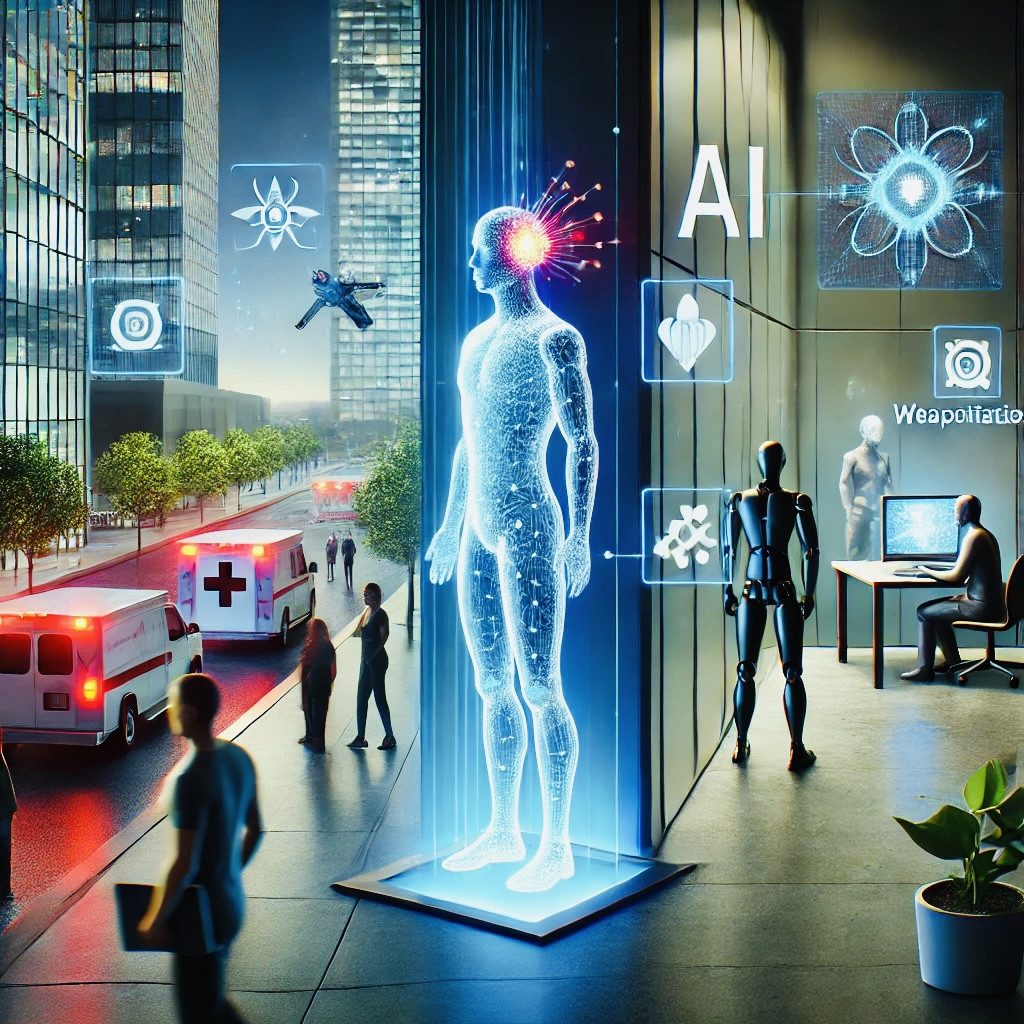
The Rise of AI: How It Impacts Daily Life and the Risks It Poses
Artificial Intelligence (AI) is reshaping the modern world, influencing everything from how we communicate to how businesses operate. As AI continues to advance, it offers immense benefits but also introduces risks that demand careful attention. This article explores how AI is transforming daily life, its potential dangers, and how we can harness its power responsibly.
How AI Is Revolutionizing Daily Life
AI has become an integral part of daily life, delivering convenience, efficiency, and innovation. Here are some ways AI is transforming how we live and work:
- Boosting Productivity
AI-driven tools are streamlining tasks across industries. In healthcare, AI assists with diagnosing diseases, while in business, it automates repetitive tasks like data entry and customer service. Tools like chatbots and AI-powered software save time and enhance accuracy, allowing humans to focus on more strategic work.
- Personalized User Experiences
AI powers recommendation engines on platforms like Netflix, Amazon, and Spotify, ensuring users get content and product suggestions tailored to their preferences. Smart home devices like Alexa and Google Home learn user habits to make daily routines more efficient.
- Transforming Transportation
AI is at the core of autonomous vehicles, promising safer and more efficient travel. Navigation apps use AI to provide real-time traffic updates, optimizing routes for drivers.
- Revolutionizing Healthcare
AI has made significant strides in medicine, from predictive analytics to robotic surgeries. Wearable devices powered by AI monitor vital signs, helping users track and improve their health.
- Automating Workflows
In industries like manufacturing, retail, and logistics, AI-driven robots and systems handle repetitive tasks, increasing productivity and reducing errors.
The Dangers of AI: What You Need to Know
While AI offers transformative benefits, it also comes with risks that must be addressed:
- Job Loss and Automation
AI is replacing jobs in sectors like manufacturing, customer service, and transportation. While it creates new opportunities in tech, many workers face the challenge of reskilling to stay relevant in the workforce.
- Privacy Concerns
AI systems collect and process vast amounts of personal data, often raising concerns about privacy and data security. Without proper safeguards, sensitive information can be misused or exposed to cyberattacks.
- Bias and Discrimination
AI algorithms are only as good as the data they are trained on. If this data is biased, the AI can produce discriminatory outcomes, particularly in hiring, lending, or law enforcement decisions.
- Weaponization of AI
The development of AI-powered autonomous weapons raises ethical and security concerns. If misused, these technologies could lead to significant harm, especially in conflict scenarios.
- Loss of Human Control
As AI systems become more complex, understanding and controlling their decision-making processes becomes harder. This lack of transparency can lead to unforeseen consequences.
- The Threat of Superintelligence
The concept of Artificial General Intelligence (AGI)—AI that surpasses human intelligence—is a significant concern. If AGI becomes a reality, it could act unpredictably and pose existential risks to humanity.
How to Embrace AI Responsibly
To enjoy the benefits of AI while minimizing its risks, we must take proactive steps:
- Implement Ethical Regulations
Governments and organizations should create clear guidelines to ensure AI development is ethical, transparent, and fair. Policies should focus on data security, accountability, and unbiased algorithms.
- Promote Education and Reskilling
With AI transforming industries, education systems need to adapt by teaching skills relevant to an AI-driven economy. Workers should have access to training programs that prepare them for emerging job opportunities.
- Foster Public Awareness
Educating people about the capabilities and risks of AI can empower them to make informed decisions. This includes understanding privacy rights and advocating for responsible AI practices.
- Prioritize Ethical AI Development
Developers must build AI systems that prioritize fairness, security, and inclusivity. Collaboration between technologists, ethicists, and policymakers is essential to achieve this goal.
Conclusion: The Dual Nature of AI
AI is a powerful tool that can improve lives, drive innovation, and address critical challenges. However, it also introduces risks, from job displacement to ethical concerns, that require careful management. By striking a balance between innovation and caution, we can ensure AI serves humanity responsibly.
As AI continues to evolve, it is up to us to guide its development and use for the greater good. Are we ready to embrace this technological revolution while safeguarding our future?